A fistula is a condition that, while not often discussed, is a reality for many people. It involves the formation of an abnormal connection or tunnel between two organs, vessels, or tubes that don't normally connect. Understanding what a fistula is, what causes it, and how it is treated is the first step toward managing this condition.
🧐 What Exactly is a Fistula?
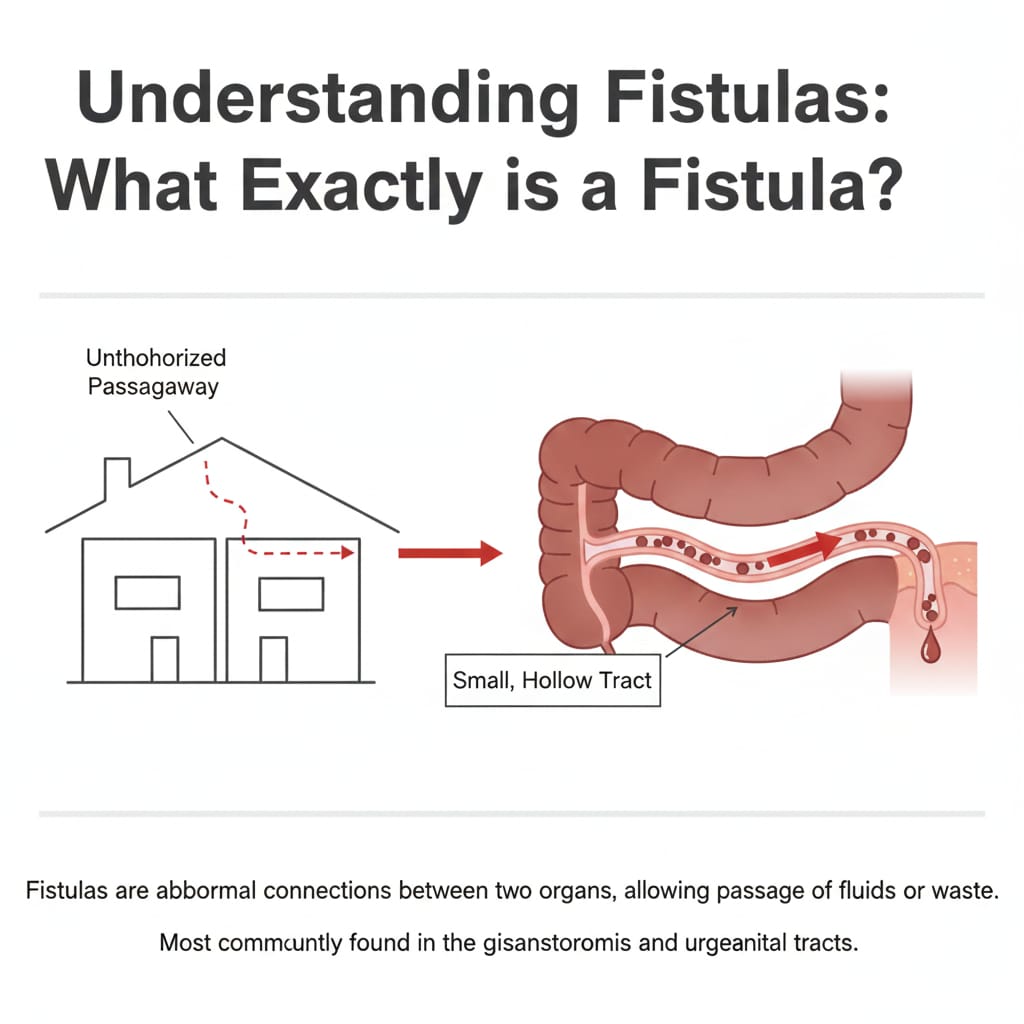
Imagine two separate rooms in a house. A fistula is like an unauthorized passageway that has been dug connecting them. In the body, this "passageway" is a small, hollow tract lined with tissue. It allows fluids, stool, or other matter to pass between the connected areas, often leading to drainage, irritation, and potential infection.
Fistulas can occur anywhere in the body, but they are most commonly found in the gastrointestinal and urogenital tracts.
The Most Common Types of Fistulas

Fistulas are typically named based on the two parts of the body they connect. While many types exist, some are more common than others:
- Anal Fistula (Fistula-in-Ano): This is the most common type. It connects the anal canal (where stool passes) to the skin near the anus. It often results from a perianal abscess (a collection of pus) that hasn't fully healed.
- Enterocutaneous Fistula: This connects the intestine (entero) to the skin (cutaneous). It usually drains intestinal contents, often resulting from surgery or inflammatory conditions like Crohn's disease.
- Vesicovaginal Fistula: This is a connection between the bladder (vesico) and the vagina, allowing urine to leak through the vagina. It is often a result of difficult childbirth, pelvic surgery, or radiation therapy.
- Rectovaginal Fistula: This connects the rectum (the end of the large intestine) to the vagina, allowing gas or stool to pass through the vagina.
What Causes a Fistula?
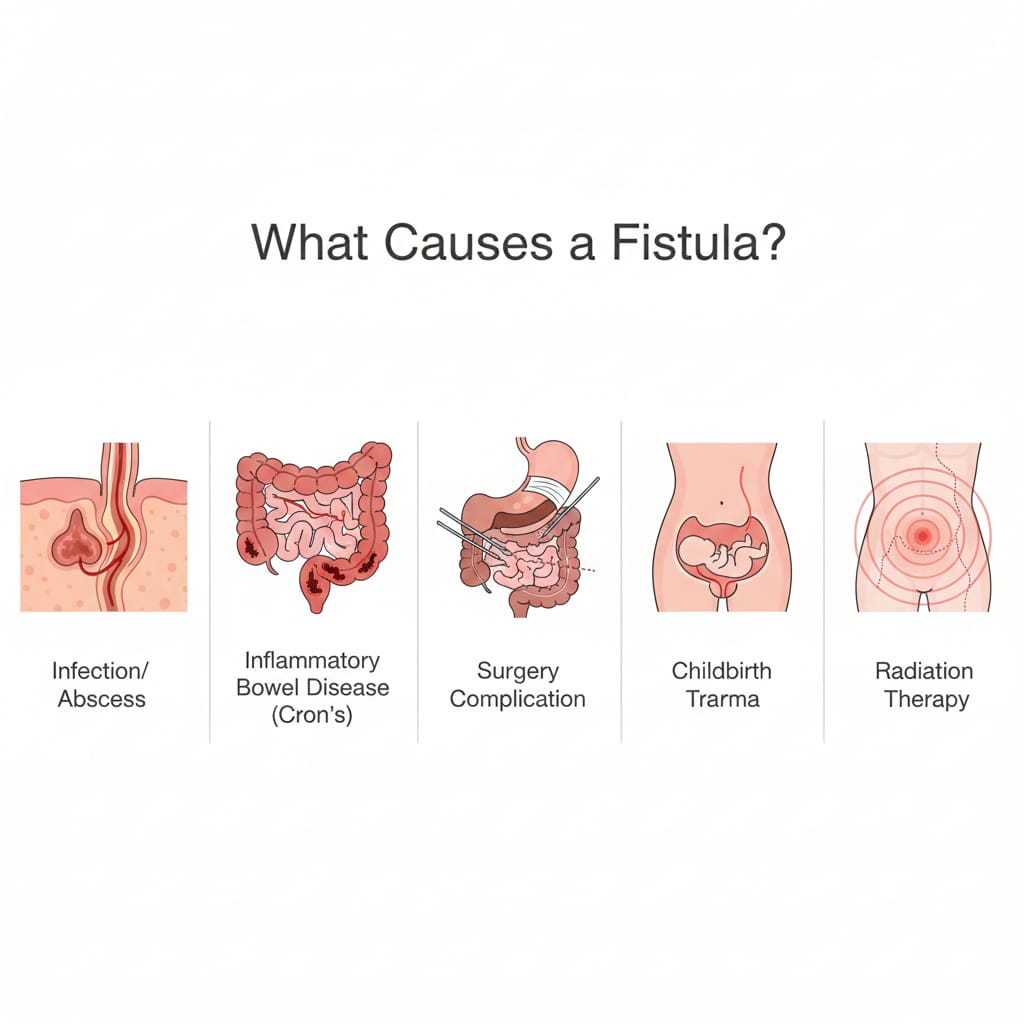
Fistulas rarely appear spontaneously; they are almost always a complication of another process. The primary causes include:
- Infection/Abscess: A pocket of pus (abscess) can form, and if it bursts or drains to another area, the tunnel it creates can become a permanent fistula. (This is the primary cause of Anal Fistulas).
- Inflammatory Bowel Disease (IBD): Conditions like Crohn's Disease can cause chronic inflammation and deep ulcers in the intestinal wall, leading to the formation of fistulas between loops of the bowel or to the skin.
- Surgery: In some cases, a complication of abdominal or pelvic surgery (such as colon or gynecological surgery) can lead to the formation of a fistula.
- Childbirth Trauma: Prolonged, obstructed labor is a leading cause of urogenital fistulas (vesicovaginal and rectovaginal) in many parts of the world.
- Radiation Therapy: Cancer treatment using radiation can weaken tissues, increasing the risk of fistula formation months or years later.
Diagnosis and Treatment Options

Diagnosis
A doctor will perform a physical exam and may order diagnostic imaging, such as an MRI, CT scan, or an endosonography (ultrasound performed via an internal probe), to clearly map the fistula tract.
Treatment
The goal of treatment is to close the abnormal connection, eliminate the infection, and allow the tissue to heal. Surgery is the definitive treatment for almost all fistulas.
Treatment options vary widely based on the location and complexity of the fistula:
- Surgical Repair (Fistulotomy/Fistulectomy): For simple anal fistulas, the surgeon may open and clean the tract (fistulotomy) or remove the entire tract (fistulectomy).
- Seton Placement: For complex or high fistulas (especially those involving the anal sphincter muscle), a drainage thread called a Seton may be placed. This allows the tract to drain while slowly cutting through the muscle over time, minimizing damage to the sphincter.
- Advanced Flap Procedures: Surgeons may use tissue flaps (from the rectum, for example) to cover and close the internal opening of the fistula.
- Fibrin Glue or Bioprosthetic Plug: In some cases, the tract can be injected with a specialized glue or sealed with a collagen plug. These are minimally invasive but may have a lower long-term success rate than surgery.
Conclusion
Fistulas are treatable, but the process often requires specialized care. If you are experiencing symptoms, do not delay seeking professional medical advice. Early diagnosis and intervention by a specialist (often a colorectal surgeon, urologist, or gynecologist, depending on the fistula type) are key to a successful outcome and a better quality of life.